
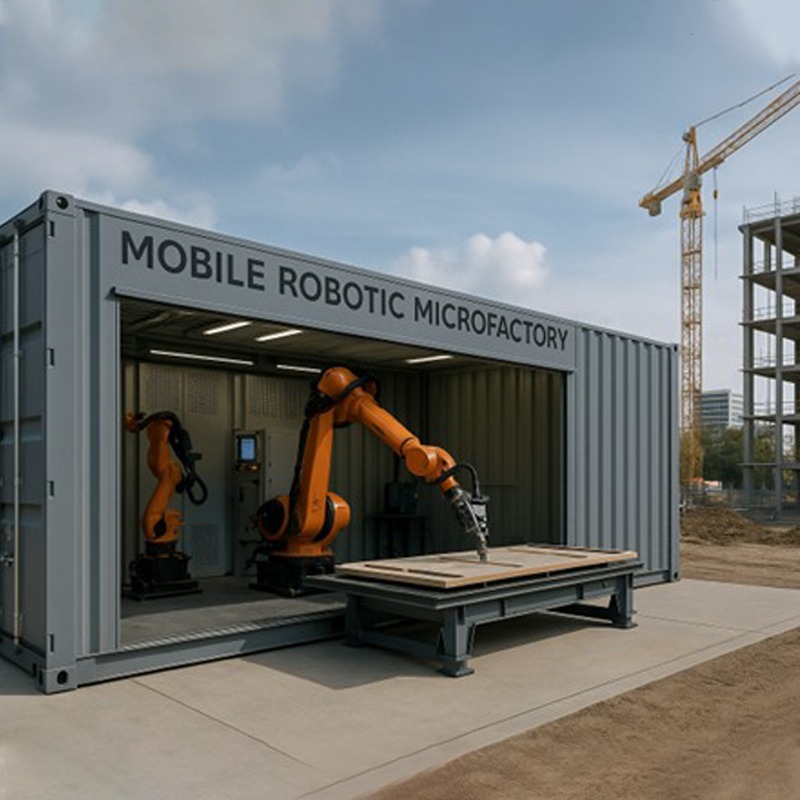
Construction sites are no longer just piles of steel and sweat. In August 2025, ABB and Cosmic Buildings launched an AI‑powered mobile micro factory in California that fabricates wall panels on site. The system combines ABB’s IRB 6710 robots and Robot Studio digital‑twin software with Cosmic’s AI‑driven building‑information model, producing custom structural panels with millimeter precision. According to ABB, the micro factory cuts build time by up to 70% and slashes costs by about 30% compared with conventional methods. It aims to deliver 100 fire‑resistant homes by 2027, reducing waste and offering solar, battery and water‑recycling systems.
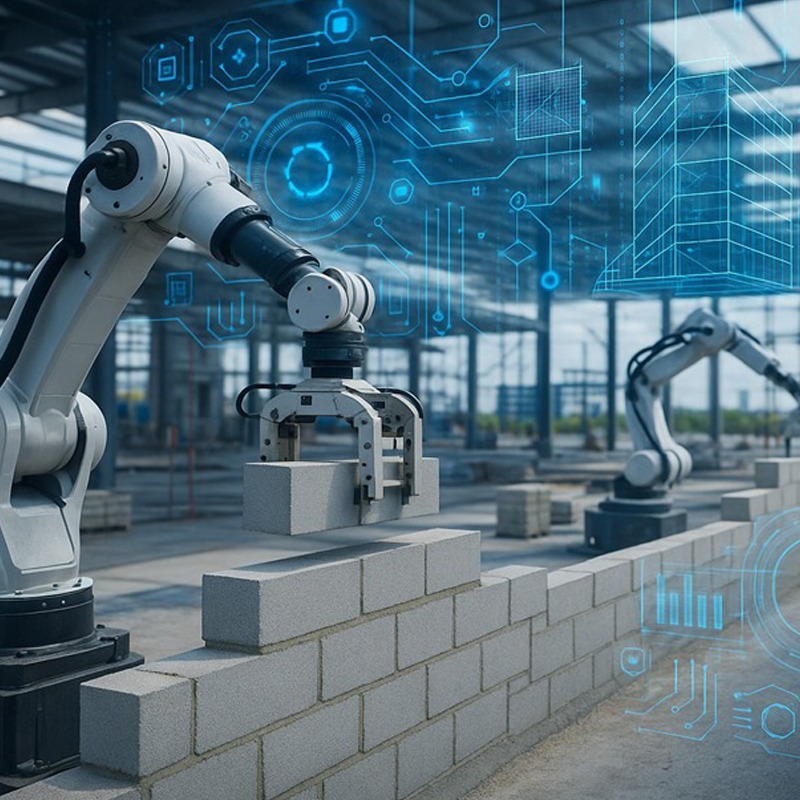
Elsewhere, U.S. builder PulteGroup piloted the Hadrian X robot in February 2025. Developed by FBR, the AI‑guided machine uses a robotic arm mounted on a truck to place concrete blocks and secure them with adhesive stronger than mortar. PulteGroup says the system built structural walls for a Florida home in a single day. The trial addresses labor shortages and demonstrates how robotics can improve safety, minimize waste and accelerate schedules.
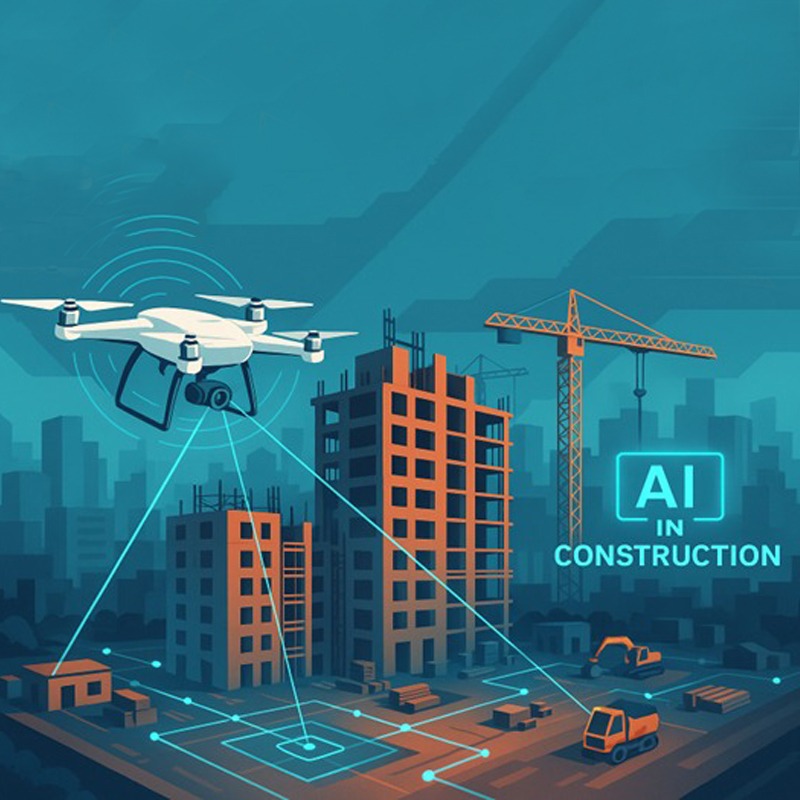
AI is also transforming site monitoring. DJI’s Matrice 400 drone, released in July 2025, features a 59‑minute flight time, a payload capacity of 6 kg and obstacle‑sensing systems using LiDAR and millimetre‑wave radar. The drone can operate in extreme temperatures and its augmented‑reality interface displays building names and landmarks in real time. Such drones provide high‑resolution aerial inspections, detect hazards through thermal imaging and give managers real‑time data without exposing workers to danger.
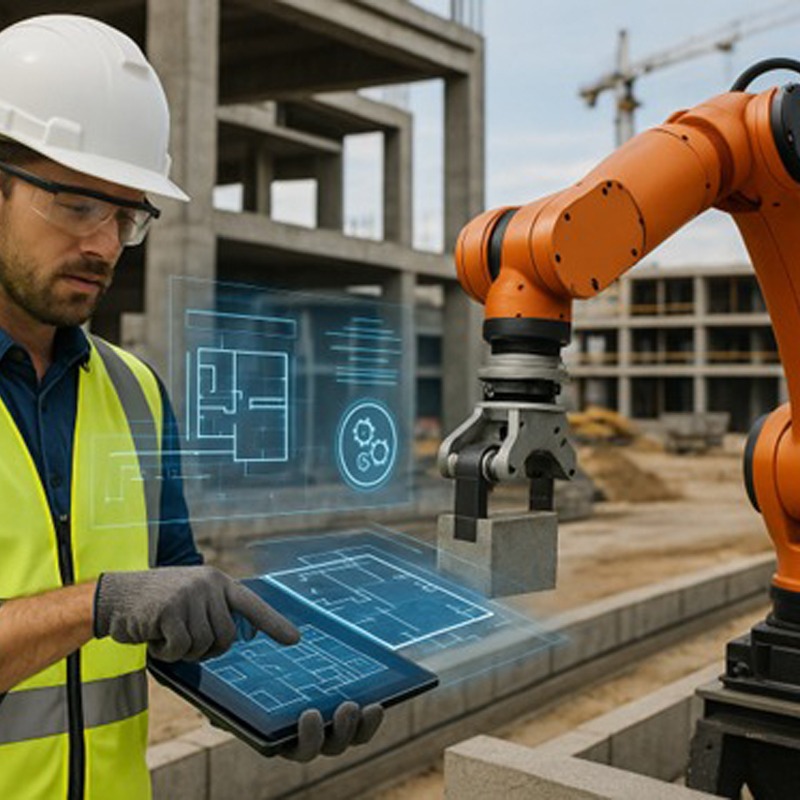
Safety advocates note that drones and robots can automate heavy lifting, material placement and demolition, reducing physical strain and injury risk. By combining aerial data with on‑site robots, teams create digital twins and coordinate tasks more precisely. As AI continues to improve, future systems could predict hazards and autonomously orchestrate construction operations.
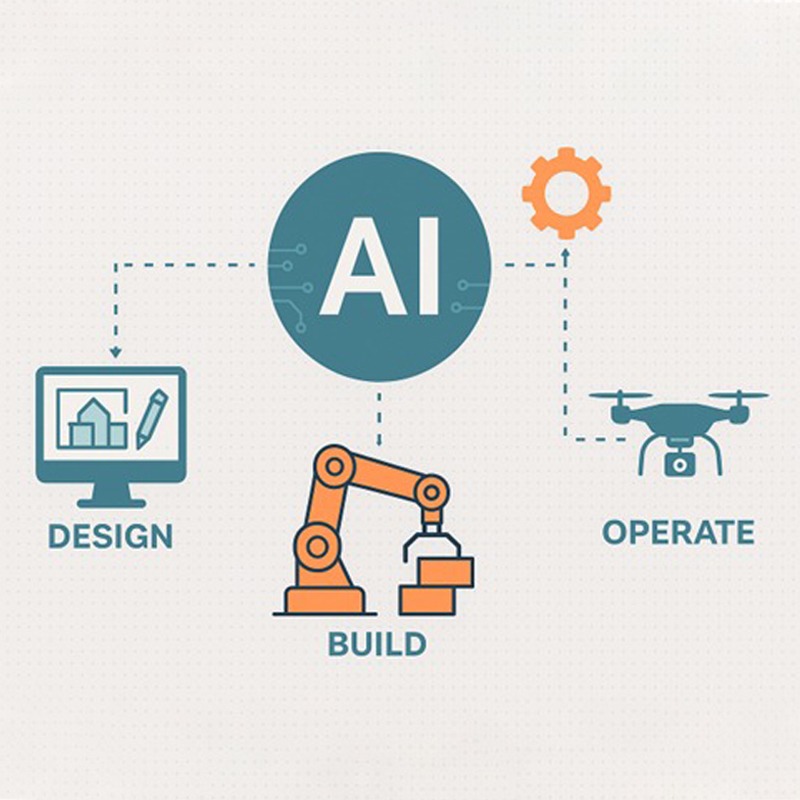
From mobile factories that print walls to drones that think, AI is rapidly moving from the lab into the field. For architects and builders, embracing these tools means faster schedules, safer jobsites and more resilient homes.