
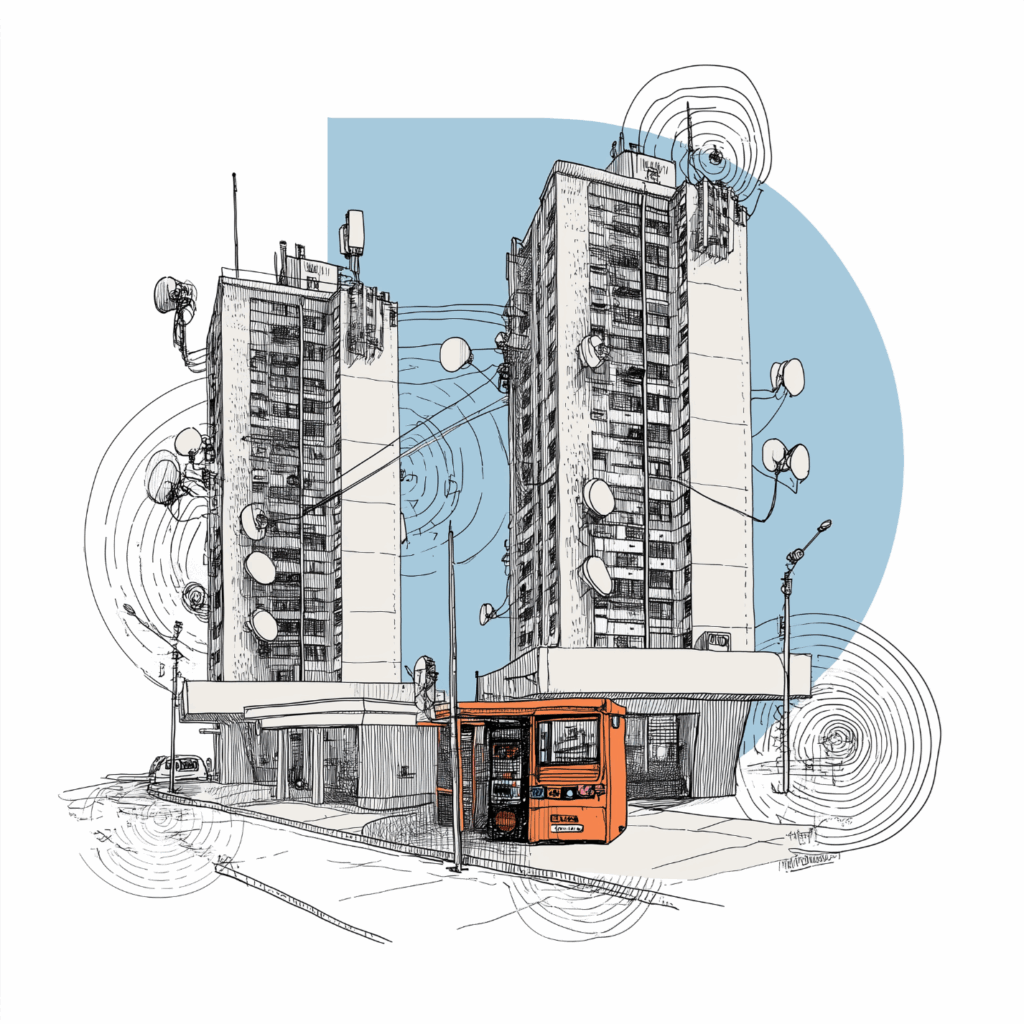
Our homes and offices have always sheltered us, but they have rarely spoken to us. That is changing. Modern “smart” buildings are being fitted with sensors – from temperature and humidity gauges to occupancy detectors – that constantly stream data to a central brain. These digital senses allow a building to monitor itself and, increasingly, to send useful messages to its neighbours. When architects and engineers talk about buildings communicating, they do not mean chatty walls. They mean invisible data sharing that helps buildings run more efficiently for the people inside them.
Smart façades, sensors and a central brain

The foundation of a talking building is its sensors. To control light, heating or ventilation, a smart façade must know the outside world. An article on modern façades explains that sensors measure wind, temperature and other influences and send these readings to a control unit; networked devices communicate via cable or wireless signals, and a building‑automation system acts as the central brain integrating sensors, actuators and façade components to optimise ventilation, lighting and energy use. In practice this might look like a rooftop weather station, room‑level motion detectors and air quality monitors all feeding data to the building management system. If afternoon sun hits the west side, shades can deploy automatically. If a stairwell remains unused, its lights dim to save power.
Digital twins: avatars of buildings
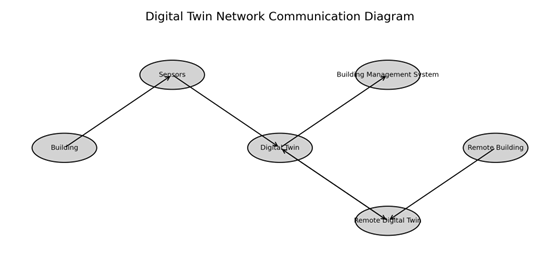
These streams of sensor data do more than adjust blinds. They feed into digital twins, virtual replicas of physical buildings that mirror the state of the real structure in real time. According to a building‑technology blog, managers use digital twins and 3D models to track and manage energy use, equipment performance and occupancy in real time. Because the twin lives online, specialists can troubleshoot equipment from afar, reducing travel and providing remote visibility and training. Researchers note that digital twins are not static models; they support performance simulation and adaptive control, allowing managers to test adjustments virtually before applying them to the real building. Think of a digital twin as the building’s avatar in the cloud, keeping an eye on every pump, fan and lightbulb and letting facility managers experiment safely.
Standard languages for talking buildings
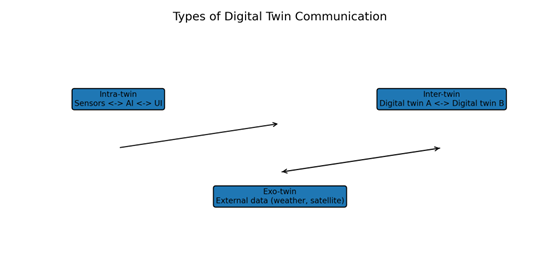
For buildings to “talk” to each other, they need a shared language. Open communication standards such as BACnet, KNX and MQTT provide that common framework. A 2025 report on smart‑building interoperability notes that open standards allow devices from different manufacturers to communicate, eliminating silos and vendor lock‑in. It goes on to explain that building‑automation protocols like BACnet and KNX support control of HVAC and lighting systems, while IoT messaging protocols such as MQTT and CoAP transmit sensor data and commands across networks. By adopting common messaging schemas, a digital twin in one building can send occupancy or energy‑load information to a neighbouring twin, enabling them to coordinate. In the diagram above, intra‑twin communication handles the loop between sensors, AI and user interfaces; inter‑twin communication connects digital twins with each other; and exo‑twin communication pulls in external data such as weather forecasts.
Why building‑to‑building conversations matter
Smart buildings already deliver measurable benefits. An industry study highlights that connecting sensors to a central brain and allowing them to “talk” to each other can reduce an office’s energy use by around 18%, with savings in some cases reaching 70%. The same centralised brain can optimise air quality and temperature for occupant comfort and wellbeing. Digital twins also support predictive maintenance: sensors monitor vibrations, heat or electrical loads, AI analyses the data, and maintenance crews are alerted before a component fails. This reduces downtime and repair costs. The bar chart below summarises the average and maximum energy savings reported by industry studies and notes that a majority of organisations see high value in digital twins.
Looking forward: symbiotic architecture

What happens when many buildings share information with each other and with the city? Futurists imagine symbiotic architecture in which buildings react not only to their own sensors but to data from their neighbours. A design article notes that advanced sensors, AI and IoT allow buildings to monitor and adapt to real‑time data such as temperature, airflow and lighting in response to human behavior or environmental shifts. Picture a street of homes that lean on each other: when one rooftop solar array produces excess electricity, it signals the office next door to charge its batteries. When a cultural centre detects high foot traffic, its twin may advise the shopping mall across the street to open additional doors or adjust ventilation. Open standards and digital twins turn isolated structures into participants in a larger ecosystem.
Conclusion
The phrase “buildings talking to each other” may sound whimsical, but the technologies behind it are here today. Sensors provide the eyes and ears, building‑automation systems act as the brain, and digital twins serve as the voice. Open communication protocols allow devices and twins from different manufacturers to share meaningful messages. The result is a built environment that responds to human needs, reduces waste and coordinates with neighbours for mutual benefit. As more architects adopt these tools, our walls may not chat, but they will quietly collaborate to make our lives better.